

EXIF data is something the digital photographer takes for granted. Camera and lens model, aperture ISO and exposure time are all recorded at the time of capture. Additionally with many cameras or in tandem with a phone app geolocation can be recorded also.
This data can be used to organize and search photo libraries, making large collections easy to manage. It supports editing workflows helping photographers apply consistent adjustments. EXIF data is also useful for learning and analysis, allowing photographers to study what settings worked in specific situations.
So when I started my recent film photography journey I wanted a way to add EXIF data to my film scans, this was one feature of modern photography I didn’t want to leave behind.
Research led me to the Frames application. Frames is an iPhone app with a companion macOS app, versions for Android and Windows are planned for 2026. I reached out to developer Vincent Tantardini for his background and inspiration for the project:
“I’m Vincent, a designer and developer who values simplicity and clarity in everything I create. I believe the best products don’t call attention to themselves, they let people focus on what matters most. Instead of adding more and more features I try to address the core problem in the most natural and intuitive way paying close attention to detail and consistency.
My interest in analogue photography began in childhood following my father as he worked with his Canon AE-1. Watching him taught me patience a respect for craft and the importance of working with intention. I’ve also been inspired by fine art photographers who combine realism with a strong visual and emotional presence often using large format cameras or Portra 400 and carefully chosen depth of field.
Film photography’s constraints, such as limited frames, stock characteristics, and the unpredictability of grain and imperfections, force thoughtful, deliberate work. Frames was built to honour that practice, bringing back the notebook as a learning tool while connecting analogue shoots with the digital world by restoring missing metadata and preserving each image’s story.
Thanks to the thoughtful feedback and support of a kind and passionate community, including users like Hedley, Frames is slowly growing into a tool I’m proud of, and I hope it can help other photographers enjoy their craft even more.”
Using Frames — my own experience
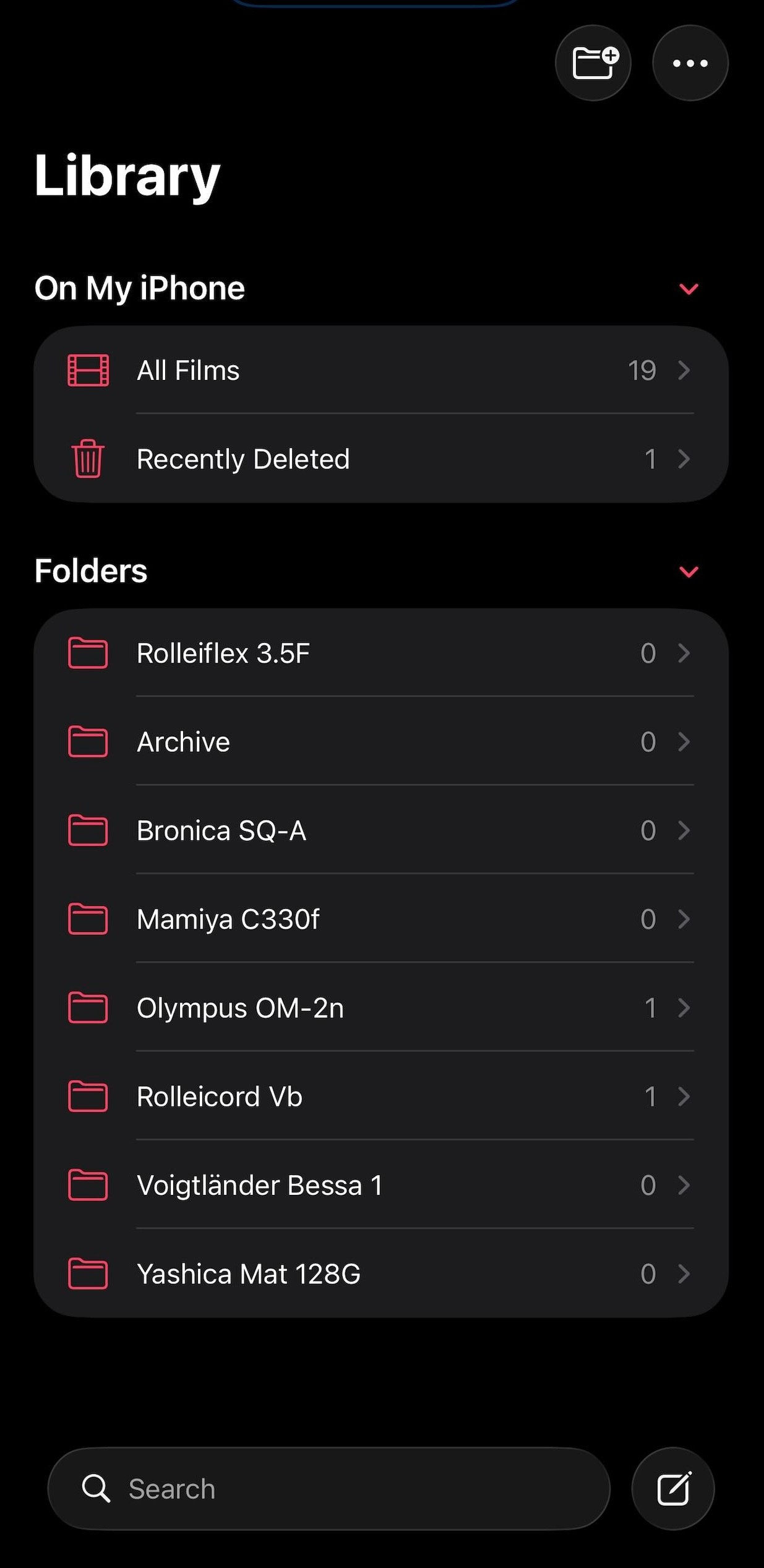
Main View
A flexible user defined folder and sub-folder layout combined with a global search function.
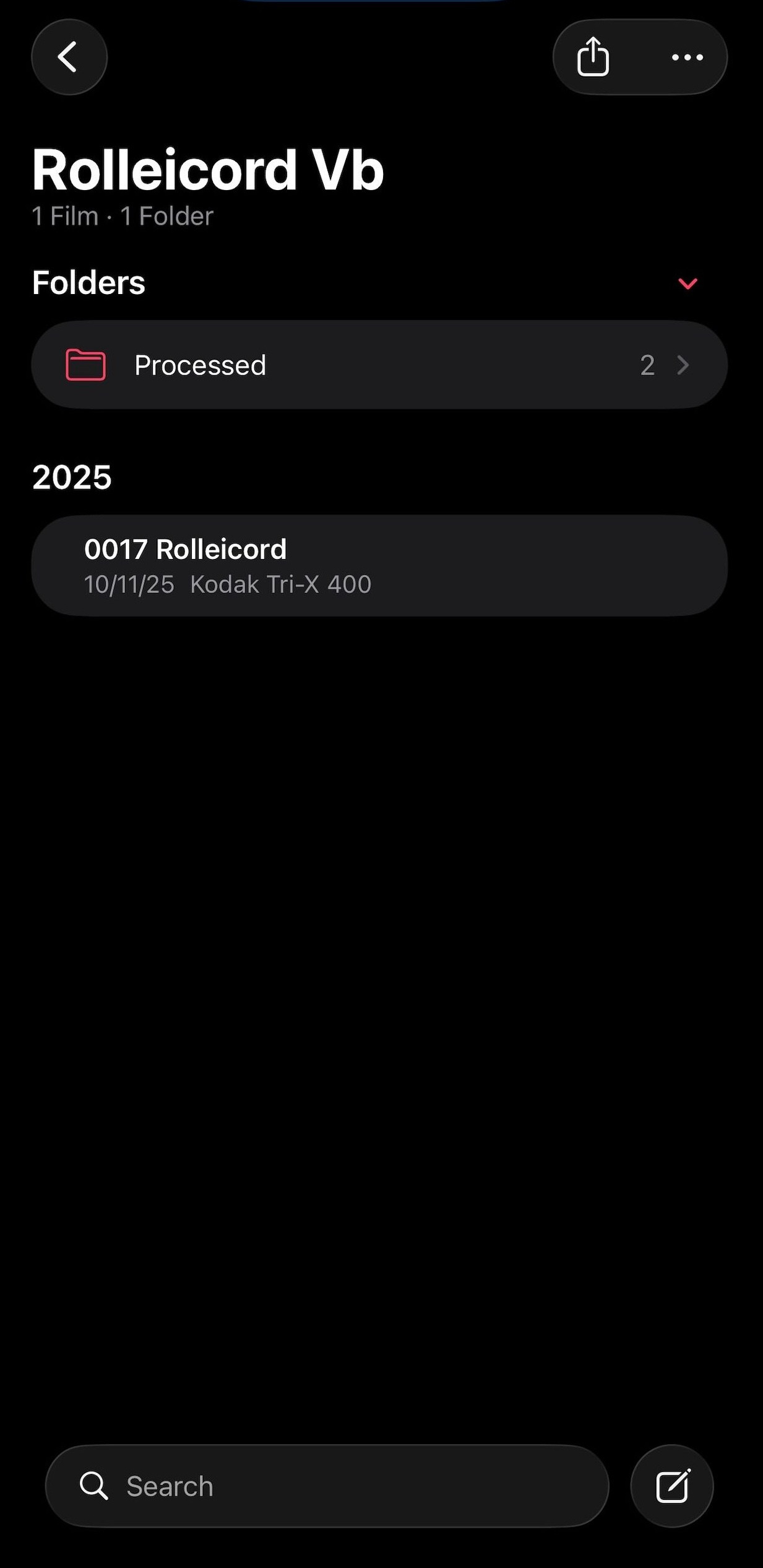
Folder Level
I give my films a four digit sequential number, should outlast both me and my bank balance…
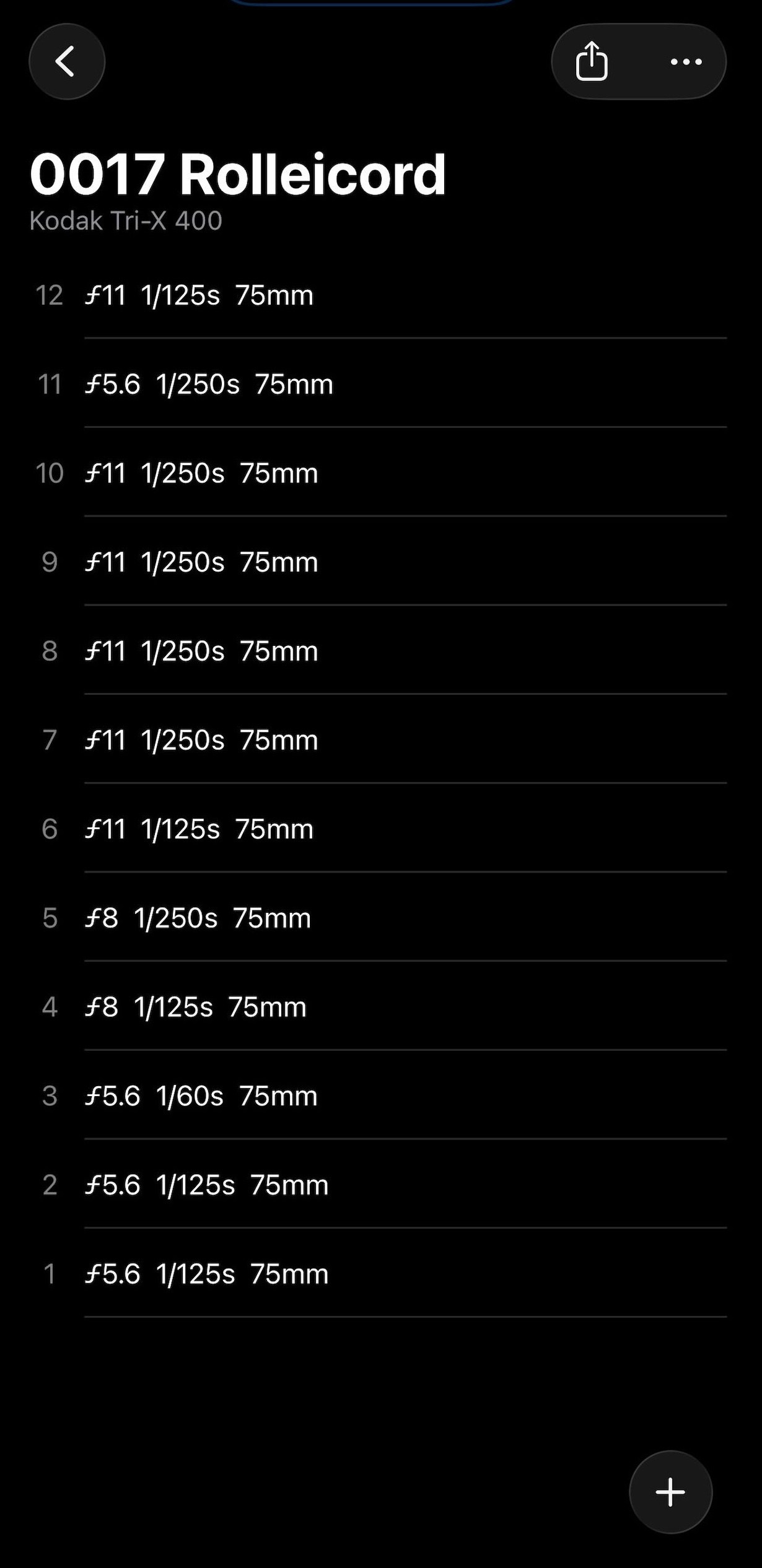
Film Detail
Overall film progress view, shot details can be edited from here.
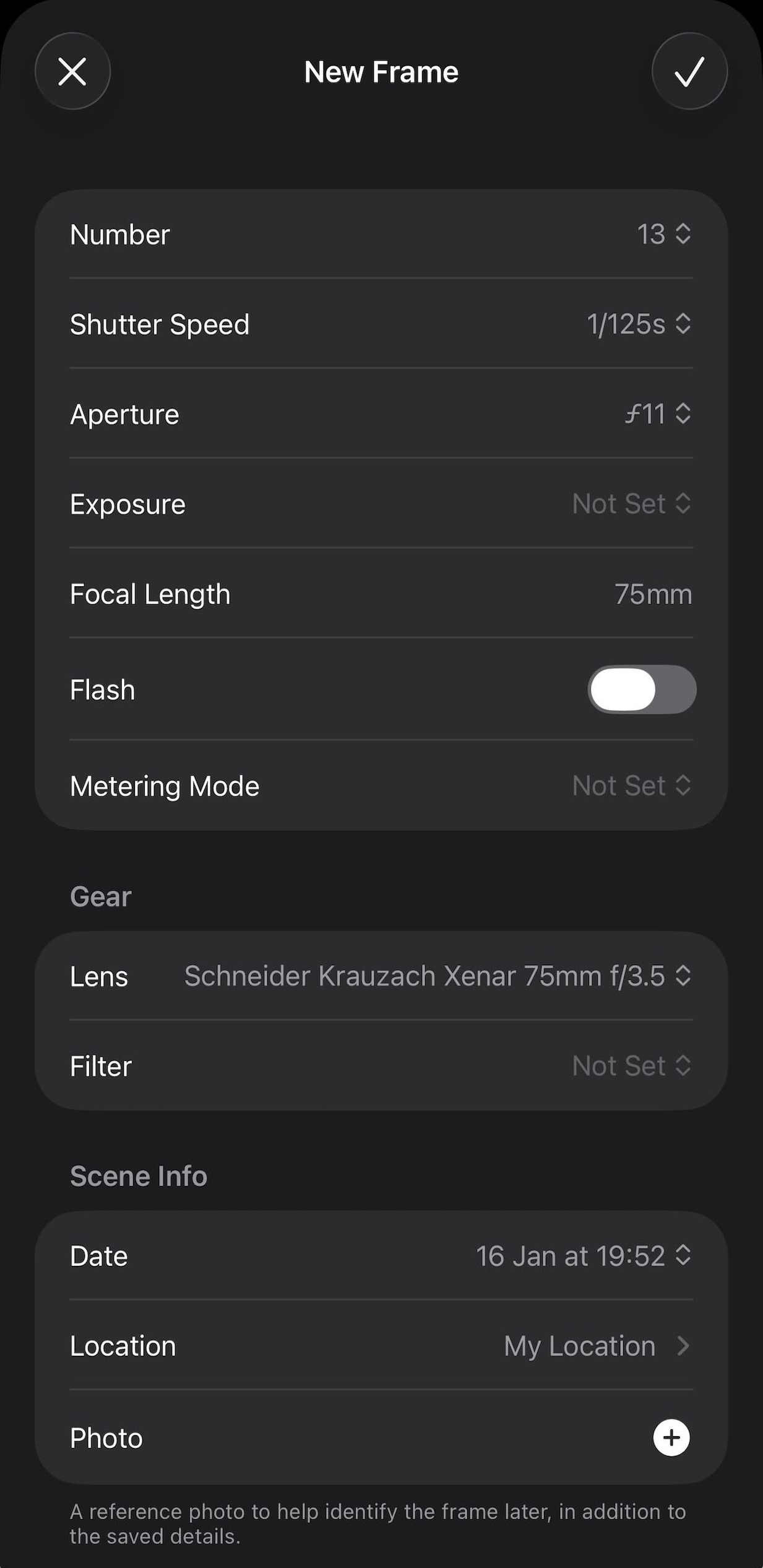
Shot Entry/Edit
Values carried forward from previous shot within a roll speed recording.
In the field I find the logical and clean Frames interface very easy to use, I have incorporated it into my film shooting workflow without it detracting from the overall experience, it just doesn’t get in the way. Even when doing street photography, at its potentially faster pace, Frames is so well designed that it takes just a few seconds to record shot details. Values are carried over from the previous exposure on that roll, location is automatically updated. Transferring data to scanned images via the companion app is also straightforward — I’ll cover that aspect in an upcoming blog post along with my Adobe Lightroom CC import workflow and examples of how I utilise the EXIF data within the catalogue.
Vincent is great at responding to user queries and feedback. Frames receives regular updates and if you’re missing EXIF data in your film photography I recommend giving it a try.


